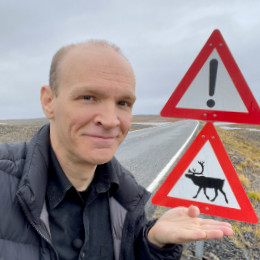
Strolling around Taos Pueblo, America’s oldest community
New Mexico’s most historic community • Taos Pueblo
Watch on YouTube (11:07)
DAY 49 – One of the non-National Park stops that was always a potential part of this three-month road trip is Taos Pueblo. Near the modern city of Taos, New Mexico, this centuries-old and still-occupied Native American village is a UNESCO World Heritage Site. Not a Park, but clearly worth a detour to get a glimpse of real, ancient American history.
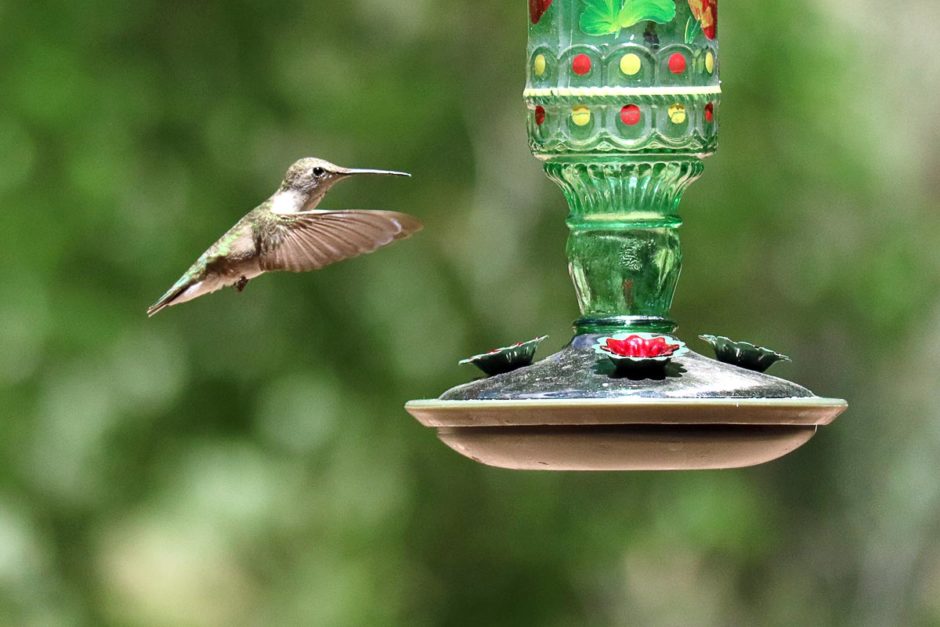
Hummingbird in Abiquiu, NM.
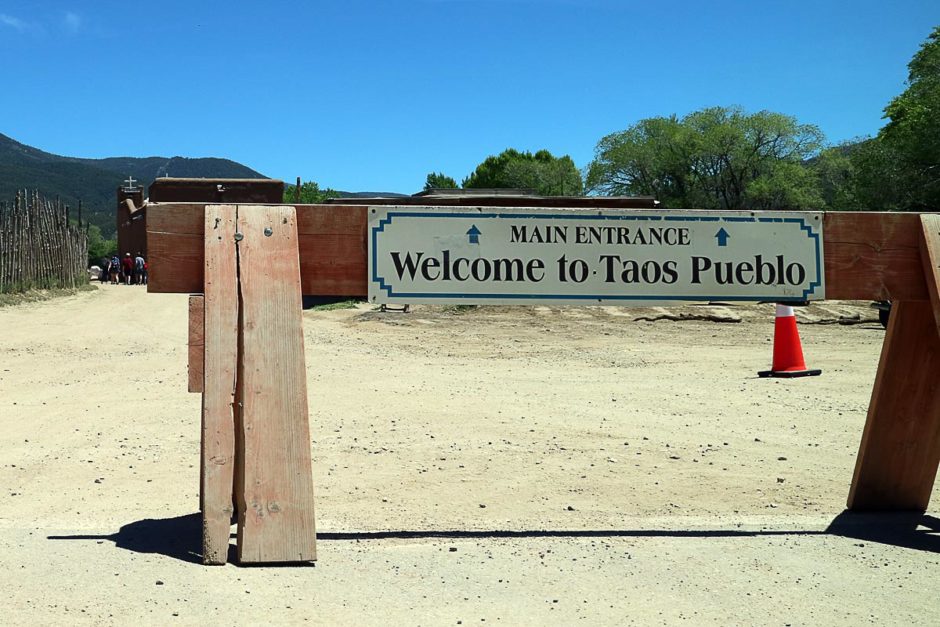
After lunch in nearby Abiquiu, Masayo and I got to Taos Pueblo, at the end of a dusty and obscure back road several miles from our hotel in Taos. Here in the warm southeast sun was a parking lot, simple pay window, and a wooden barrier blocking cars but ushering pedestrians into the village: Welcome To Taos Pueblo.
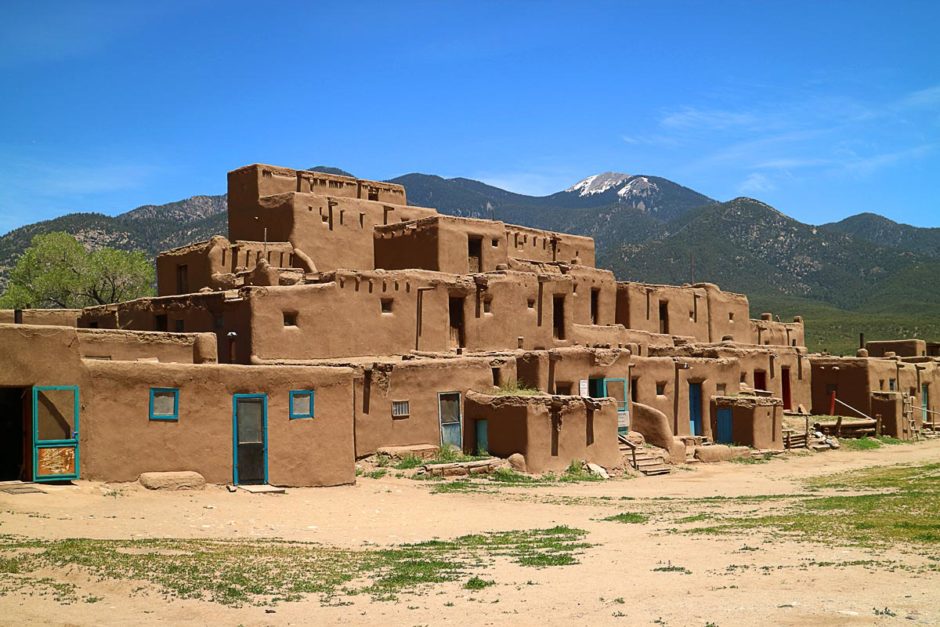
Taos Pueblo is small, and the atmosphere is an awkward one, a mixture of tourism and reverence. Visitors are encouraged to stop at those mud houses whose residents have turned the front room into an art gallery or café, but not to take photos of the locals without permission. We tourists trod across the big dirt lot in the center of the village, smiling uneasily at the Puebloans. Like when traveling internationally, I felt the urge to be discreet until I got a feel for the place.
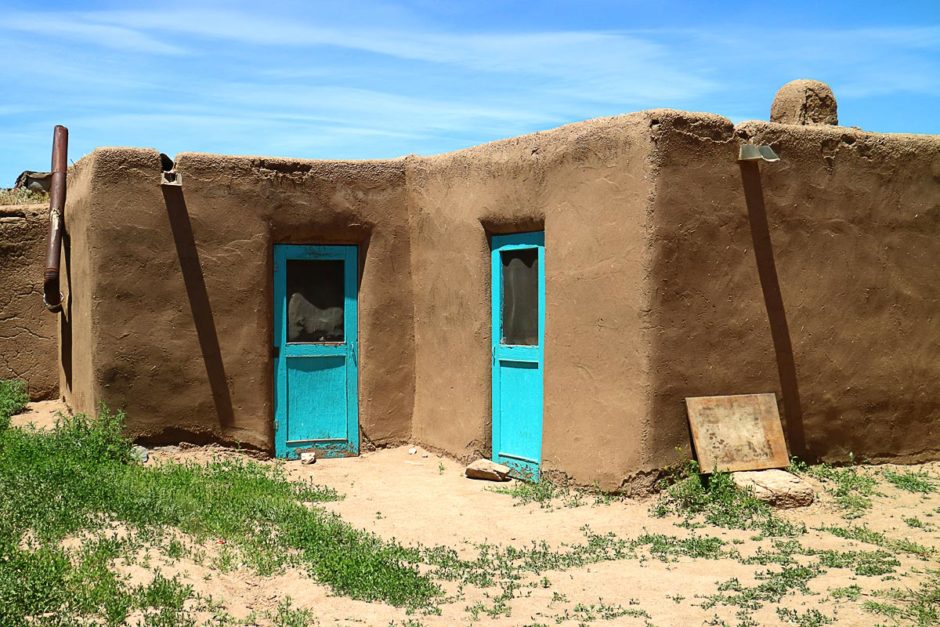
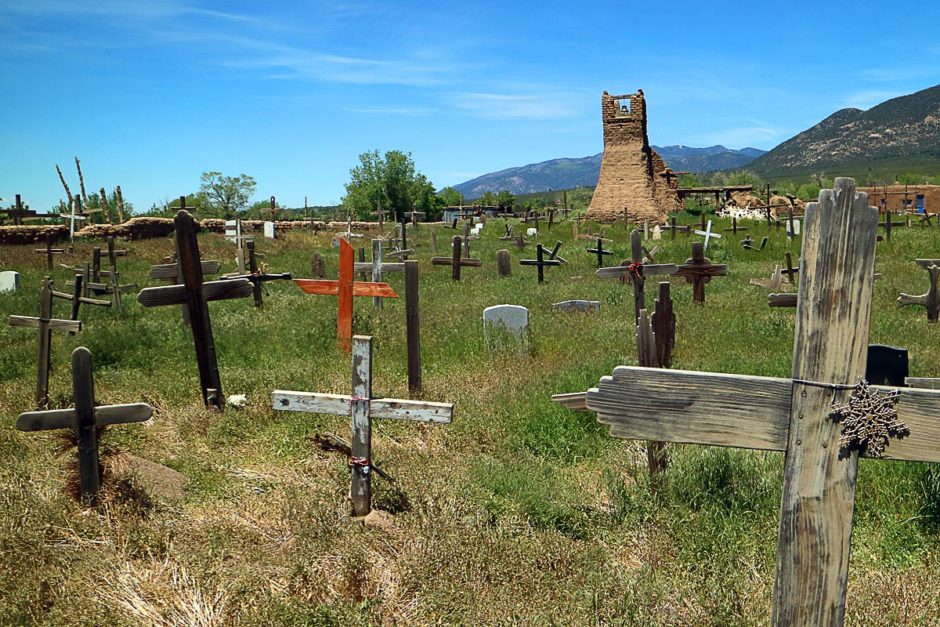
And that analogy proved apt, for when we took a free (tips appreciated) tour from one of the locals, Jaro, he averred that Taos Pueblo is a sovereign nation, distinct from the United States. He also admitted, as he led a group of about twenty of us to different parts of the villages for short lectures, that he himself lived outside the village in a modern apartment.
“Oh no, I like showers and TV,” he laughed.
Jaro is a college student, graduating soon, and is one of several who give these tours every half hour. He explained how the Spanish attacked the village and how they still make bread in large clay ovens heated with fire and how villagers get in and out of their multi-story houses with wooden handmade ladders that they pull up when inside.
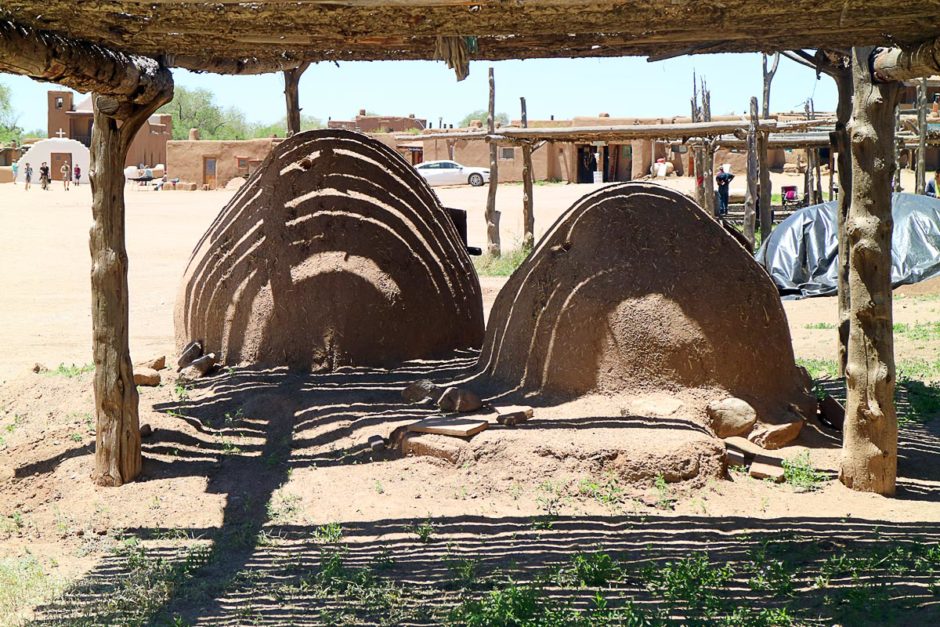
Ovens.
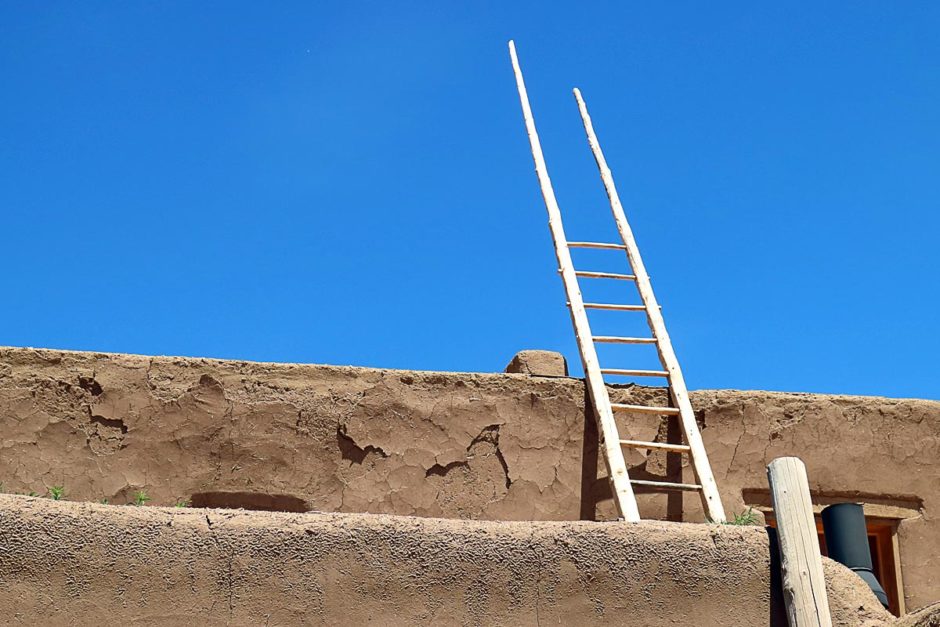
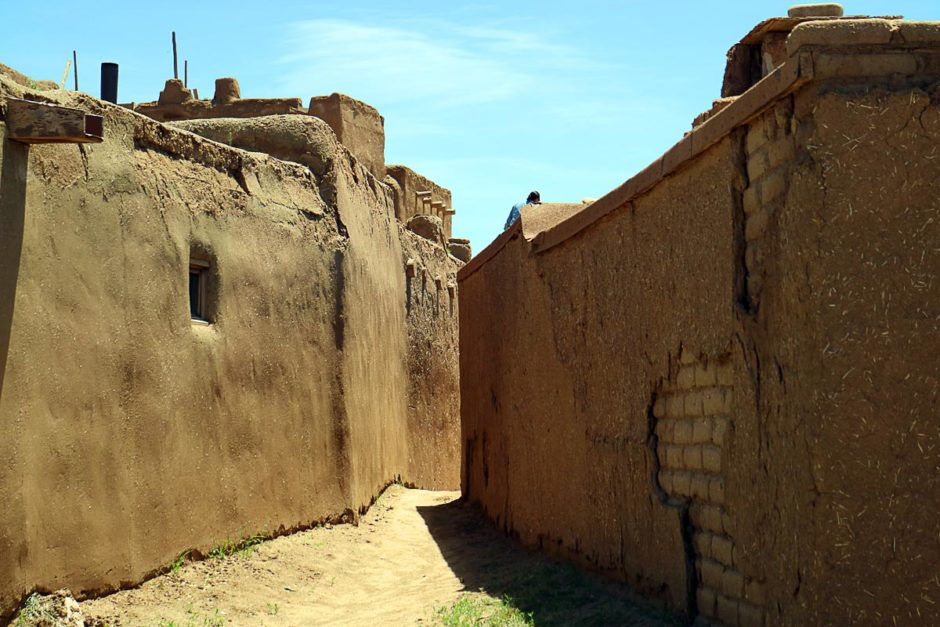
It was an interesting tour, and Jaro wasn’t shy about suggesting tips at the end of the half-hour. And most of us were happy to oblige – it was interesting to hear the history of the village and to understand how they made walls of mud that kept houses cool in summer and warm in winter.
After the tour, Masayo and I wandered across the stream in the middle of the village to the other side. There were a few shops here but most houses had signs warning of private property. We ducked into a couple of houses with welcoming signs, chatting with the owners about their displays.
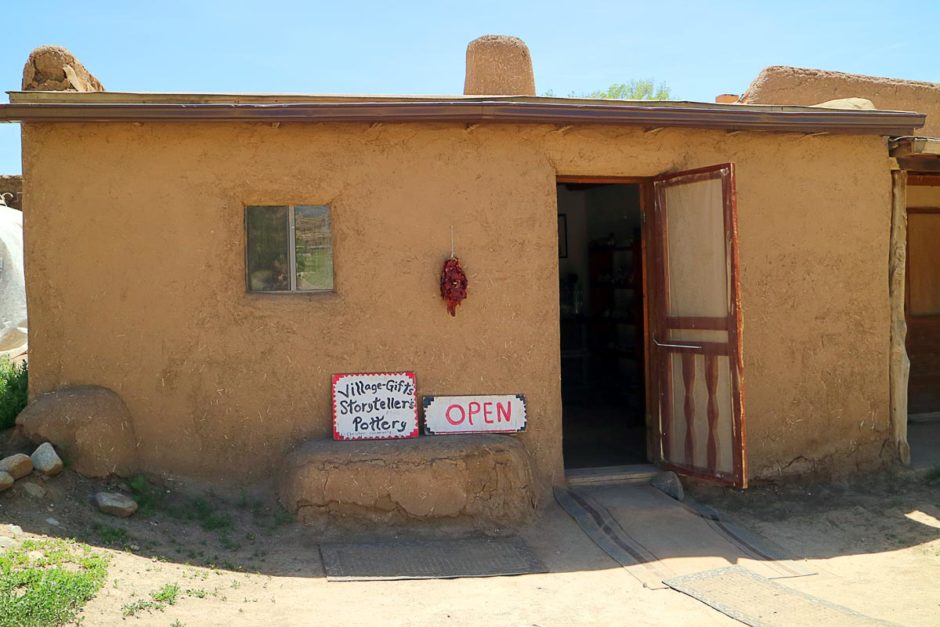
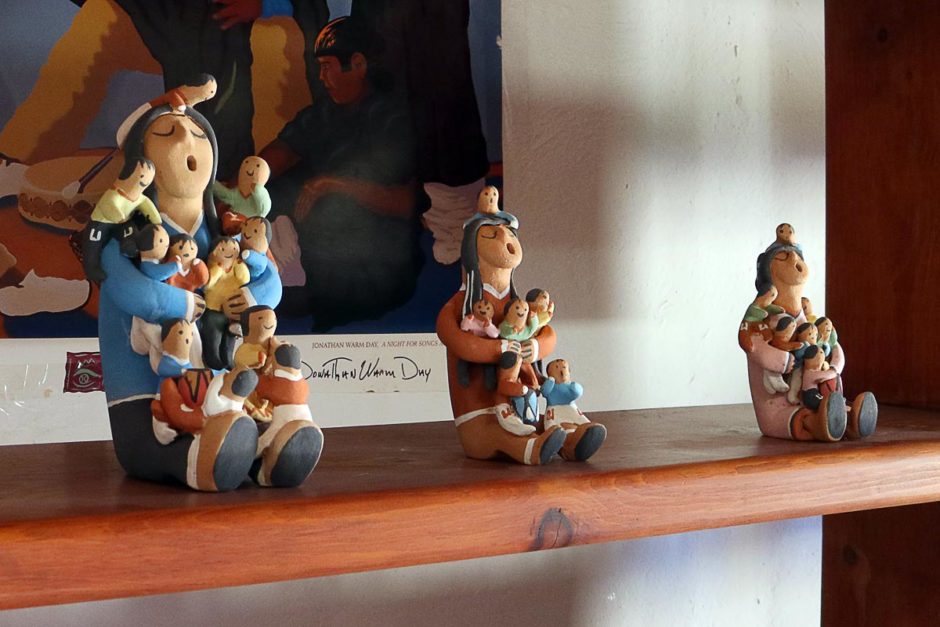
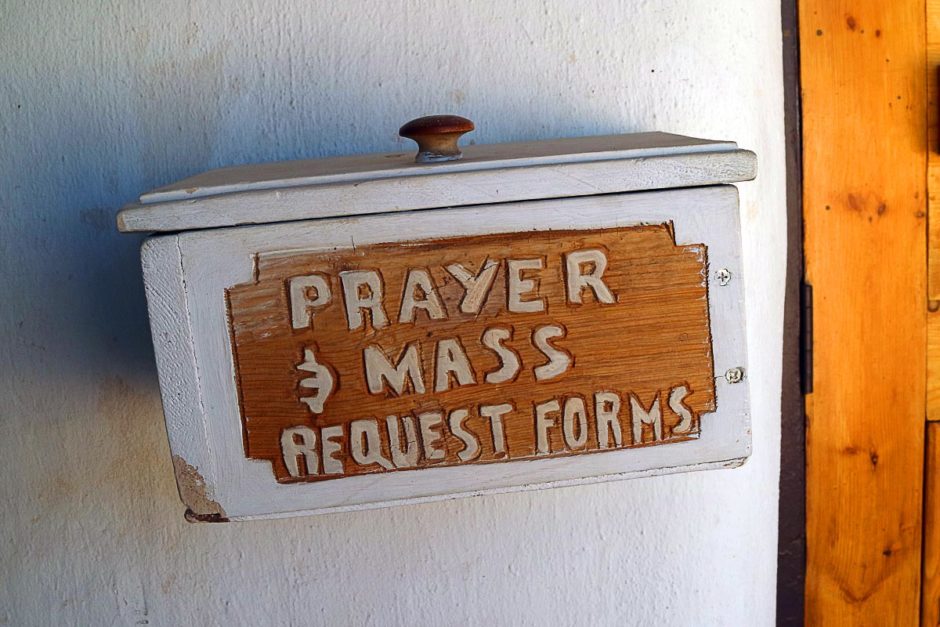
Prayer box outside the village church.
The capper to the day in Taos Pueblo was lunch: I ordered something called a Tiwa Taco with piñon coffee. (The people in this village speak a language called Tiwa.) The dish turned out to be fried round dough with vegetables, meat, and spices on top. It was excellent, and sitting outside in a covered area at a simple plastic table felt more like Vietnam than America: cozy and simple.
Tiwa Tacos are hard to calculate an insulin dose for, though. I guess I did pretty well: I was 180 before the repast and a couple of hours later I had got down to 69.
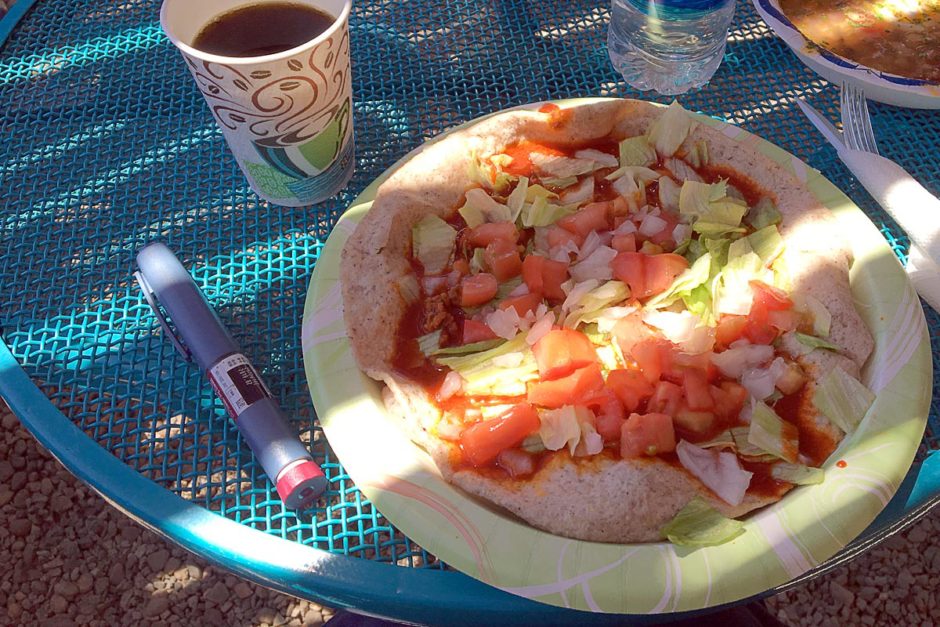
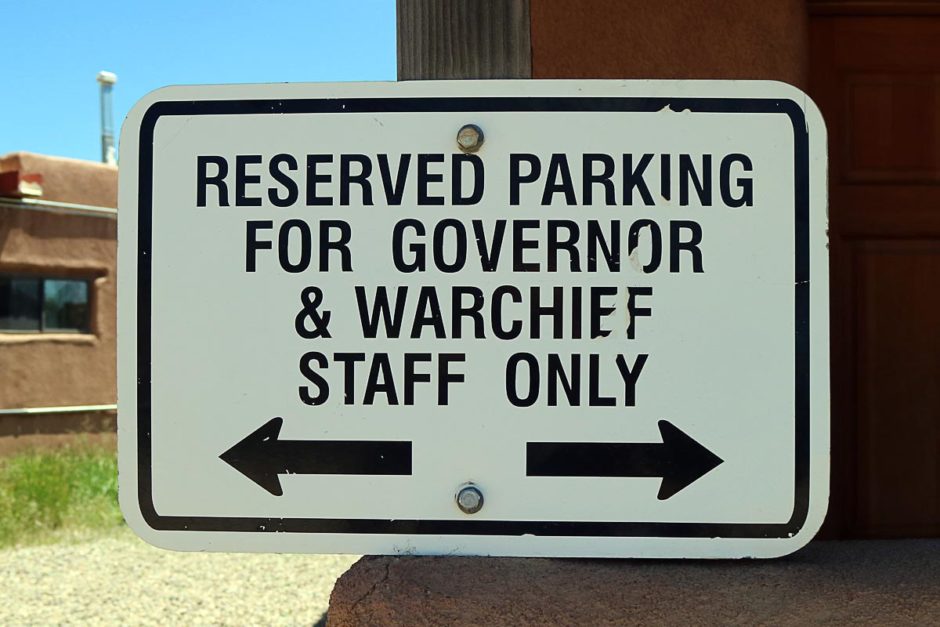
Tiwa Tacos don’t have as many carbohydrates in them as you might think, and piñon coffee is good even in warm weather. These are the sorts of valuable if arcane nuggets of wisdom you pick up on a visit to a fascinating and approachable place like Taos Pueblo.